
Sri Lanka
Join our 11-day birding adventure across Sri Lanka’s most iconic habitats — from the lush rainforests of Sinharaja and Kitulgala to the highlands of Horton Plains and Nuwara Eliya, and the dry coastal forests of Yala National Park. Observe more than 200 bird species, including a good chance to see all 35 endemics, alongside mammals such as elephants, leopards, and monkeys. Led by an expert guide, this immersive journey blends stunning scenery, rich biodiversity, and authentic island charm — the ultimate tropical birding experience!
Tour dates:
August 13 - 23, 2026 (4-6 participants)
September 13 - 23, 2026 (4-6 participants)
Summary
This birding tour explores Sri Lanka’s rich and varied landscapes, including coastal wetlands, tropical rainforests, misty highlands, and dry lowland reserves. We will see over 200 bird species with a high chance to spot all 35 of the island’s unique endemics.
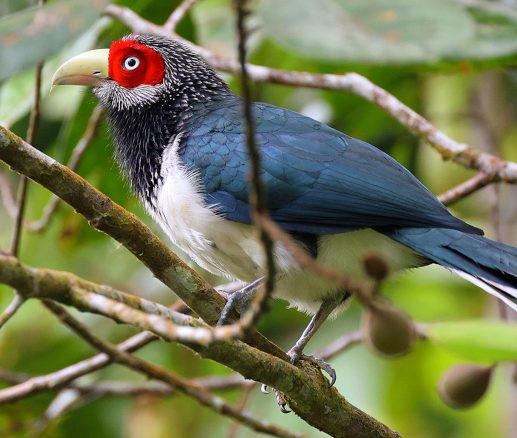
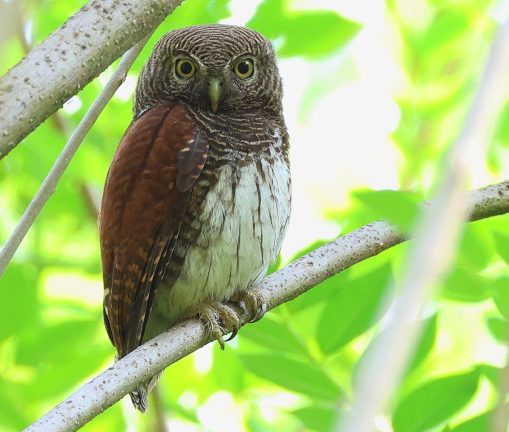
The journey begins and ends at the international airport in Colombo/Negombo. Depending on the arrival time, we can go for some first birding in the Muthurajawela Wetlands, home to kingfishers, jacanas, and herons. After lunch, we will drive east to Kitulgala and the nearby Makandawa Forest Reserve, where lush rainforests host specialties like the Green-billed Coucal, Chestnut-backed Owlet, and the rare Serendib Scops-Owl.
Ascending into the highlands, Nuwara Eliya and Horton Plains National Park offer opportunities to see montane endemics such as Sri Lanka Bush Warbler, Sri Lanka Whistling-Thrush, Sri Lanka Thrush, and Yellow-eared Bulbul.
Further south, Tissamaharama and Yala National Park provide rich wetland and savanna habitats where waterbirds mingle with raptors and large mammals (including elephants and leopards). A visit to Bundala National Park adds excellent wader and tern watching, while Udawalawa National Park offers prime raptor viewing.
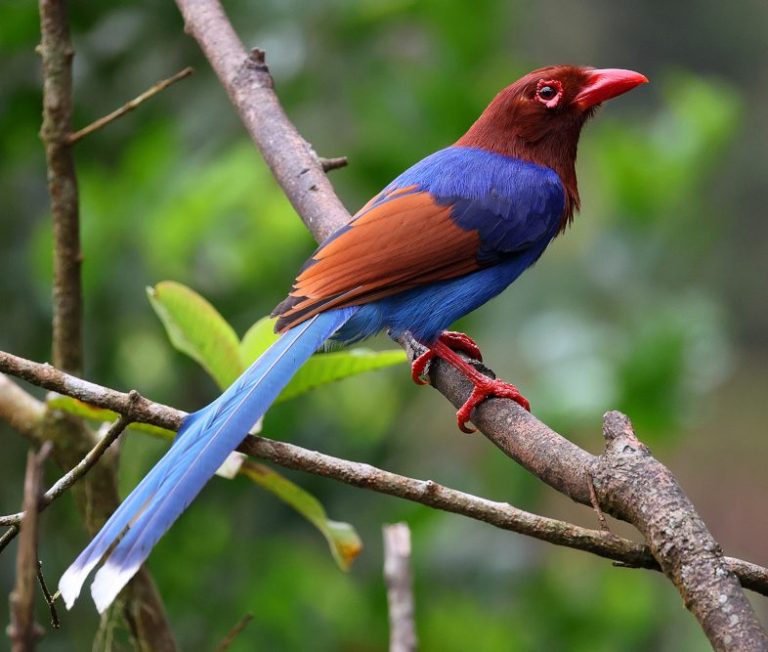
The tour culminates in the UNESCO-listed Sinharaja Forest Reserve, the jewel of Sri Lankan birding. Here, participants seek the island’s most elusive endemics, including Red-faced Malkoha, Sri Lanka Blue-Magpie, and Serendib Scops-Owl, amid pristine rainforest. After a final morning’s birding in Sinharaja, the group returns to Colombo, completing an unforgettable journey through Sri Lanka’s spectacular avian and natural treasures.
Detailed itinerary
Day 1: Arrival and birding around Colombo & Negombo
On arrival we will meet our guide at Bandaranaike International Airport north of Colombo. Depending on the arrival time, we can visit the Muthurajawela Wetlands where we can expect to see birds such as the Lesser Whistling-Duck, Greater Coucal, Asian Koel, Gray-headed Swamphen, White-breasted Waterhen, Red-wattled Lapwing, Pheasant-tailed Jacana, Oriental Darter, Yellow Bittern, Spot-billed Pelican, Stork-billed Kingfisher, White-throated Kingfisher, Pied Kingfisher, Brown-headed Barbet, Black-headed Oriole, Zitting Cisticola, Yellow-billed Babbler, Purple-rumped Sunbird, Loten‘s Sunbird, and a good number of terns and waders.
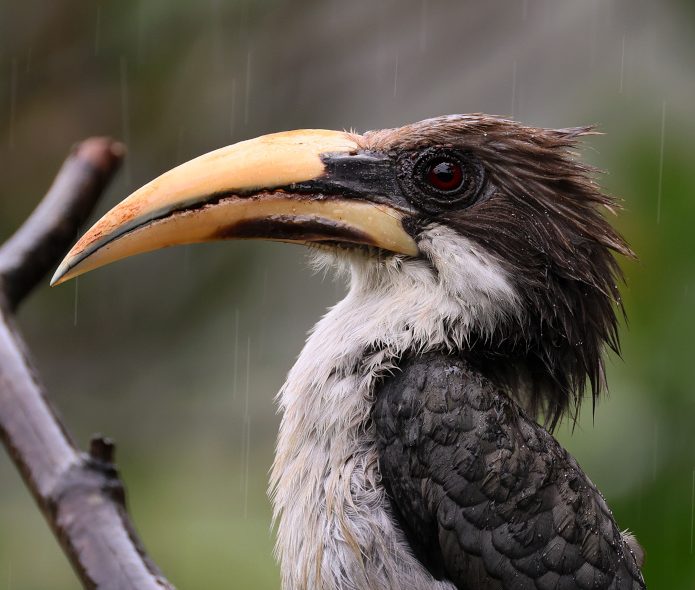
After lunch, we will drive towards Kitulgala. On the way, we can stop at several promising birding spots. We will arrive in Kitulgala in the afternoon and will do some birdwatching in the village and along the Kelani River. We will try to spot the endemic Sri Lanka Green-Pigeon, Green-billed Coucal, Chestnut-backed Owlet, Layard‘s Parakeet, Sri Lanka Hanging-Parrot, Sri Lanka Swallow, Black-capped Bulbul, Sri Lanka Scimitar-Babbler, Brown-capped Babbler, Orange-billed Babbler, Spot-winged Thrush, and White-throated Flowerpecker. Other interesting species include the Asian Emerald Dove, Malabar Trogon, Sri Lanka Gray Hornbill, Black-backed Dwarf-Kingfisher, and Indian Pitta.
Night in Kitulgala.
Day 2: Kitulgala and Makandawa Forest Reserve
Today, we will visit the Makandawa Forest Reserve near Kitulgala. This rainforest is a fantastic birding hotspot, but spotting birds takes some patience in the dense forest. Our main target birds are the Chestnut-backed Owlet and Green-billed Coucal. Furthermore, the very rare Serendib Scops-Owl and Sri Lanka Bay-Owl have also been observed in this forest. We will spend most of the day in the forest and can also bird along the forest edge in the afternoon and evening.
Night in Kitulgala.
Day 3: Kitulgala to Nuwara Eliya
We spend another morning birding at Kitulgala before driving to Nuwara Eliya. We will reach the town in the afternoon and visit several birding spots in the surrounding forests. Nuwara Eliya is situated at a higher altitude and offers the possibility to find a number of range-restricted species. Our target birds include the endemic Yellow-eared Bulbul, Sri Lanka White-eye, Sri Lanka Thrush, and Dull-blue Flycatcher. Other interesting species occurring in the area include the Legge‘s Hawk-Eagle, Bar-winged Flycatcher-shrike, Velvet-fronted Nuthatch, Indian Blackbird, Indian Blue Robin, and Forest Wagtail.
Night in Nuwara Eliya.
Day 4: Horton Plains National Park and Victoria Park
We start very early in the morning to drive to the Horton Plains National Park. This nature reserve offers the best chance to see the endemic Sri Lanka Bush Warbler and Sri Lanka Whistling-Thrush. We will also keep our eyes open for the endemic Sri Lanka Wood-Pigeon, Yellow-eared Bulbul, Sri Lanka White-eye, and Dull-blue Flycatcher. In addition, it might be possible to spot Black Eagle, Hill Swallow, Black-throated Munia, and Tricolored Munia. In the afternoon, we will visit Victoria Park in Nuwara Eliya.
Night in Nuwara Eliya.
Day 5: Nuwara Eliya to Tissamaharama
We will spend another morning birding around Nuwara Eliya before leaving the mountains behind on our drive to Tissamaharama in southern Sri Lanka. On the way, we stop at promising birding sites looking for the Brown Wood-Owl, Sri Lanka Scimitar-Babbler, and Brown-capped Babbler among others. We will reach Tissamaharama in the afternoon and look for birds in the vicinity of Tissa Lake. Here, we can spot a number of water birds such as the Cotton Pygmy-Goose, Watercock, Pheasant-tailed Jacana, Black Bittern, Yellow Bittern, and Spot-billed Pelican. In the forest surrounding the lake, we can find several owls, including the Eastern Barn Owl, Indian Scops-Owl, Jungle Owlet, and Brown Boobook. Furthermore, we have a good chance to spot the White-naped Woodpecker.
Night in Tissamaharama.
Day 6: Yala National Park
Today, we will go on a full-day safari in Sri Lanka‘s most famous national park. This nature reserve offers the chance to see a large number of birds of dry lowlands and coastal forests. Our target birds include Sri Lanka Junglefowl, Blue-faced Malkoha, Pied Cuckoo, Gray-bellied Cuckoo, Great Thick-knee, Yellow-wattled Lapwing, Asian Woolly-necked Stork, Black-necked Stork, Painted Stork, White-bellied Sea-Eagle, Brown Fish-Owl, Malabar Pied-Hornbill, Yellow-crowned Woodpecker, Indian Pitta, Ashy-crowned Sparrow-Lark, Jerdon‘s Bushlark, Sri Lanka Swallow, Rosy Starling, Streaked Weaver, Baya Weaver, and many more. In addition to birds, the park also offers the chance to see many mammals, including the Asian Elephant, Leopard, and Wild Water Buffalo.
Night in Tissamaharama.
Day 7: Bundala National Park to Udawalawa
We start the day with a safari to the coastal wetlands of the Bundala National Park. This nature reserve gives us the chance to see a number of wading birds as well as terns. Furthermore, we can try to spot Pied Cuckoo, Great Thick-knee, Indian Thick-knee, Yellow-wattled Lapwing, Asian Openbill, Painted Stork, Oriental Darter, Osprey, Brahminy Starling, and many more. We will also keep our eyes open for one of the rare Lesser Adjutants. In the afternoon, we will continue our journey to Udawalawa, where we spend the evening birding in the outskirts of Udawalawa National Park.
Night in Udawalawa.
Day 8: Udawalawa National Park to Sinharaja
We start the day with a safari in Udawalawa National Park. This reserve is particularly famous for raptors and we have good chances to see the Oriental Honey-buzzard, Crested Serpent-Eagle, Changeable Hawk-Eagle, Brahminy Kite, White-bellied Sea-Eagle, and Gray-headed Fish-Eagle. In addition, we will try to spot Indian Peafowl, Sri Lanka Junglefowl, Orange-breasted Green-Pigeon, Blue-faced Malkoha, Sirkeer Malkoha, Barred Buttonquail, Indian Roller, Yellow-crowned Woodpecker, White-tailed Iora, Indian Paradise-Flycatcher, Jungle Prinia, and Sri Lankan Shama. After lunch, we will leave Udawalawa and drive to Sinharaja. This protected rainforest is one of the best birding spots in Sri Lanka inhabited by a large number of endemic species. We will stay overnight in a simple guest house in the middle of the forest, which can only be reached by jeep. On the way to the guest house, we will stop and try to find the Slaty-legged Crake.
Night in Sinharaja.
Days 9-10: Sinharaja Forest Reserve
We will spend two full days in the forest. Our target birds include the endemic Sri Lanka Spurfowl, Sri Lanka Junglefowl, Sri Lanka Wood-Pigeon, Sri Lanka Green-Pigeon, Green-billed Coucal, Red-faced Malkoha, Serendib Scops-Owl, Chestnut-backed Owlet, Sri Lanka Gray Hornbill, Yellow-fronted Barbet, Crimson-backed Flameback, Layard‘s Parakeet, Sri Lanka Hanging-Parrot, Sri Lanka Drongo, Sri Lanka Blue-Magpie, Black-capped Bulbul, Sri Lanka Scimitar-Babbler, Ashy-headed Laughingthrush, Orange-billed Babbler, Sri Lanka Myna, White-faced Starling, and Spot-winged Thrush. Other interesting birds include the Sri Lanka Frogmouth, Sri Lanka Bay-Owl, Malabar Trogon, Brown-capped Pygmy Woodpecker, Square-tailed Bulbul, Dark-fronted Babbler, and Brown-breasted Flycatcher. In addition, several endemic mammals and reptiles are possible.
Nights in Sinharaja.
Day 11: Sinharaja to Colombo
We will have a last morning for birding in the rainforest of Sinharaja. Afterwards, we will drive to Colombo, where the tour ends.